
2025 Market Guide
Yard Management
Featured Vendor
Copyright Terminal Industries © 2025 All Rights Reserved
Technical Index
blog
Terminal Industries is bringing Missions™ to Modex 2026 — a new execution layer within its Yard Operating System™ that turns every yard workflow into a structured, real-time operational process.
blog
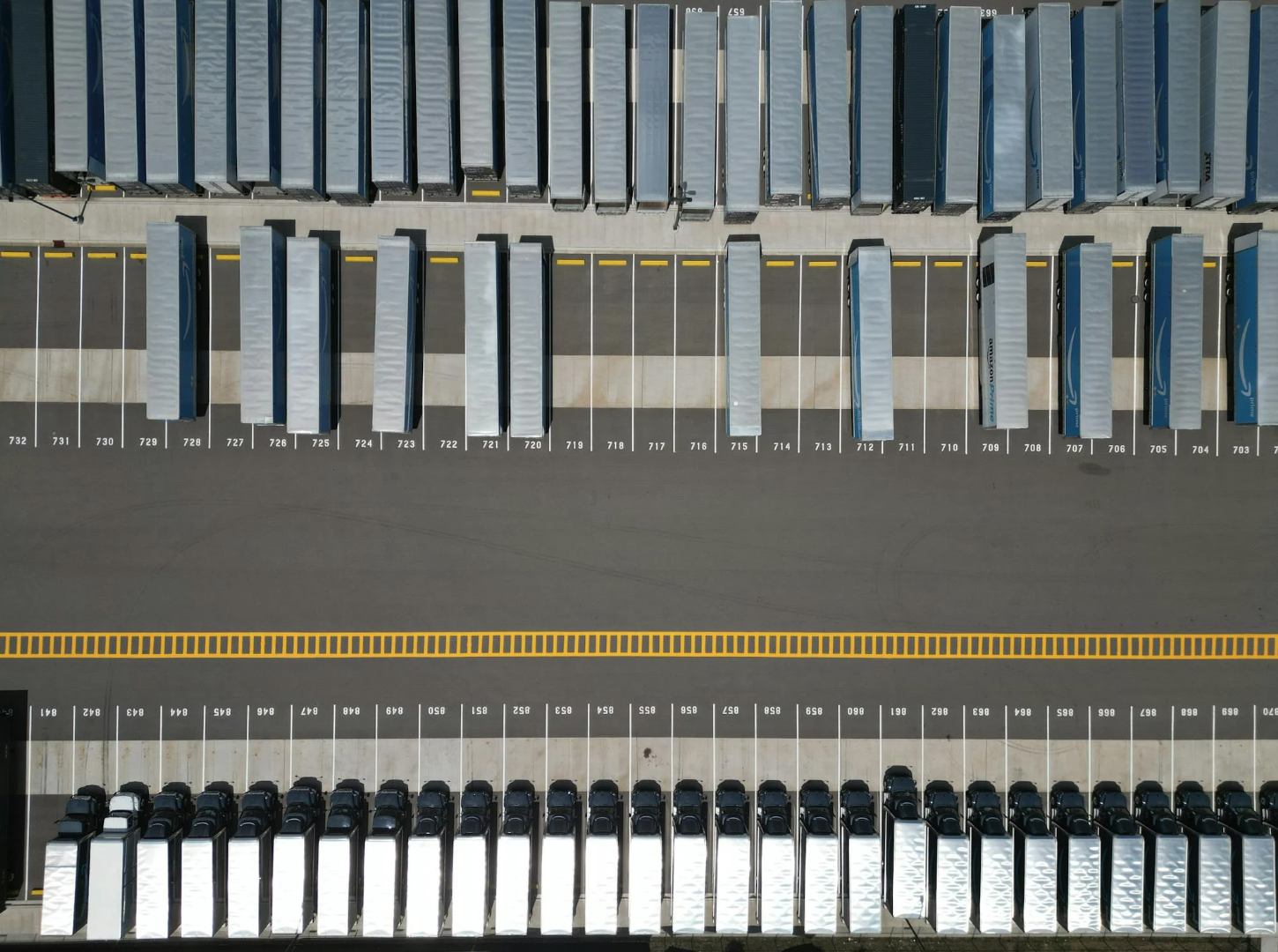
Terminal Industries is launching Missions™ — a new capability within its Yard Operating System™ that transforms how yard operations are planned, executed, and measured. Missions™ introduces a fundamentally different way to run the yard: not as a collection of disconnected events, but as a system of structured, real-time workflows that govern how work actually gets done. Because despite years of investment in visibility tools, integrations, and tracking systems, the yard remains one of the least controlled environments in the supply chain.
blog
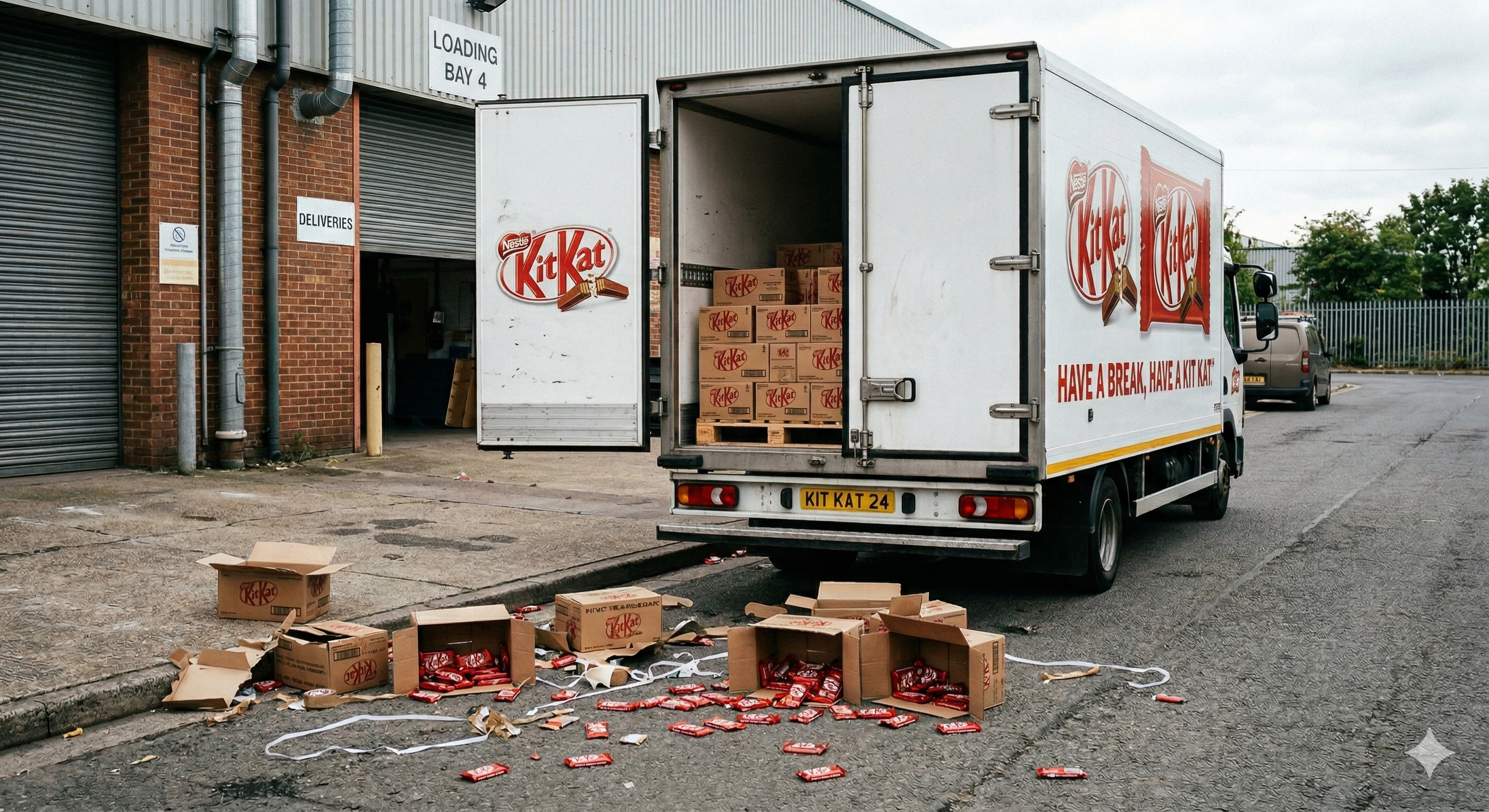
A truck carrying over 410,000 limited-edition Formula 1 KitKat bars didn’t just get stolen, it was intercepted. On a highway outside Turin, thieves posing as law enforcement stopped the truck, removed the driver, and disappeared with 12 tons of highly specific, time-sensitive cargo. This wasn’t random or opportunistic. It was informed, coordinated, and executed with precision.
blog
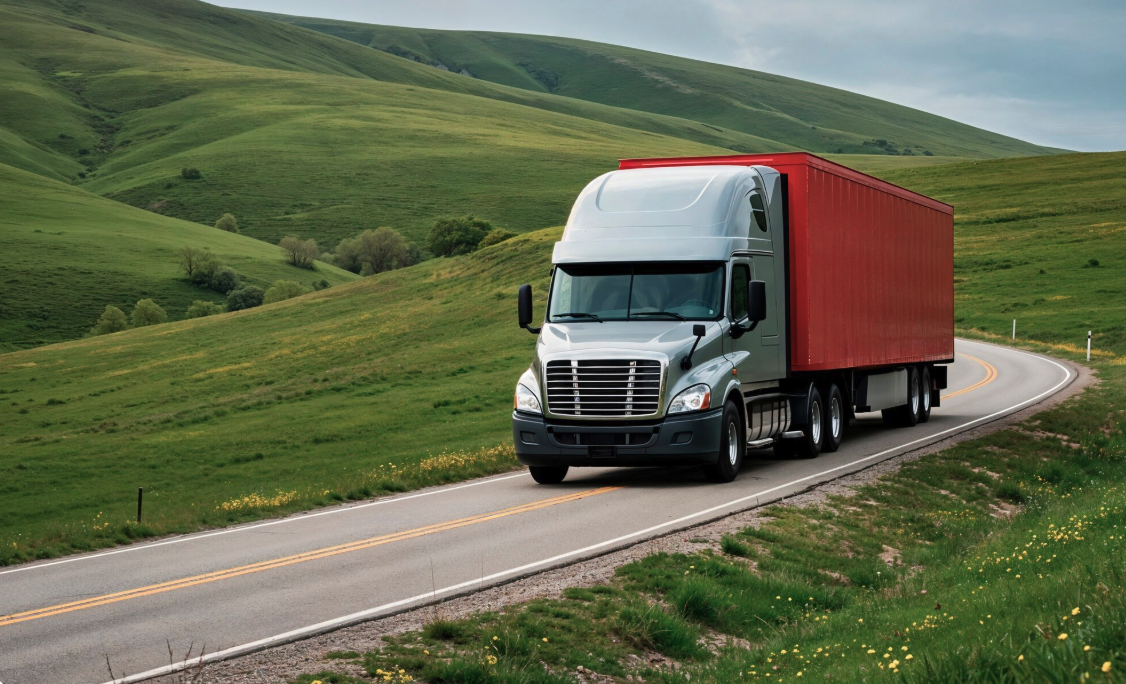
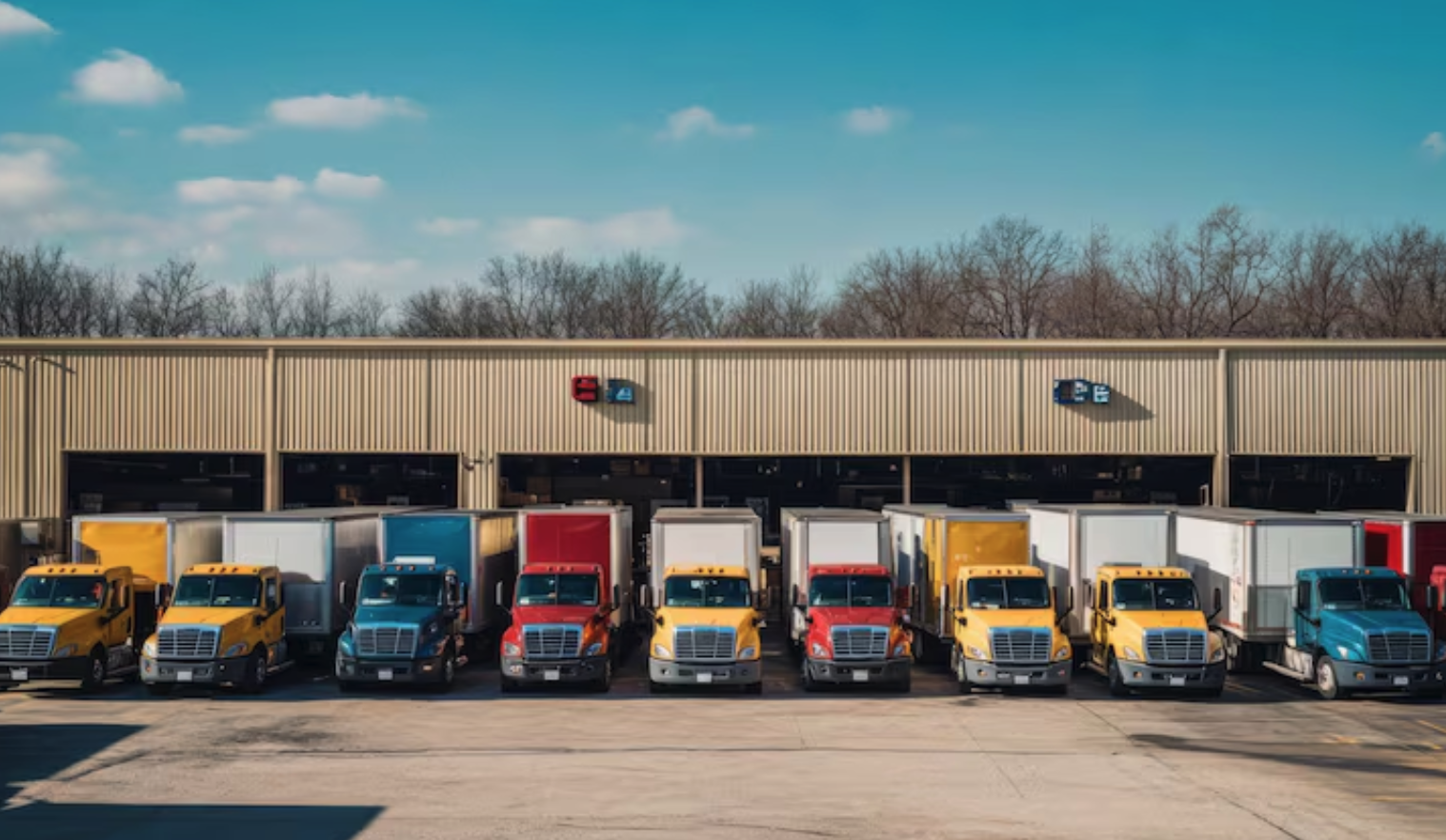
The Cost Everyone Accepts Fuel is getting more expensive. But here’s the part no one questions: How much of that fuel is actually being used productively? Because inside the supply chain, there’s a massive blind spot: Truck drivers lose 30–40% of their usable driving time sitting idle in yards.
blog
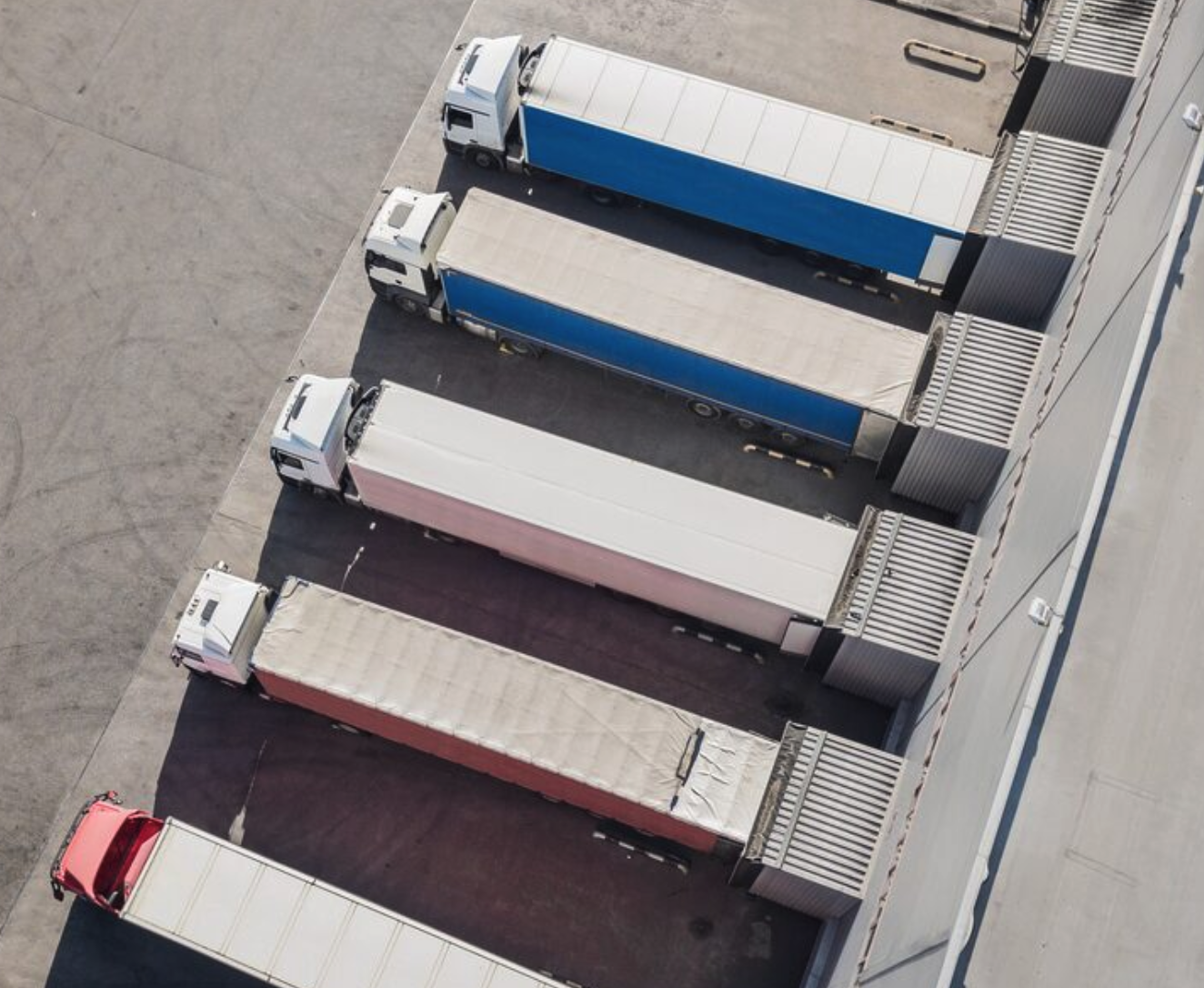
Yards are often managed through a patchwork of radio calls, spreadsheets, manual scans, and tribal knowledge. A location may be “updated,” but only after the move. A status may be “confirmed,” but only by someone who had time to type. Within a few hours, the system of record quietly stops matching reality. Teams notice. Trust breaks. And the yard reverts to what it has always been: people chasing certainty by driving around.
blog
Yards are where small delays turn into big, expensive problems. Not because people are bad at their jobs. But because the yard is messy by nature. It sits between transportation and the warehouse and security and sometimes customers. If you do not have tight control there, everything gets fuzzy fast.
blog
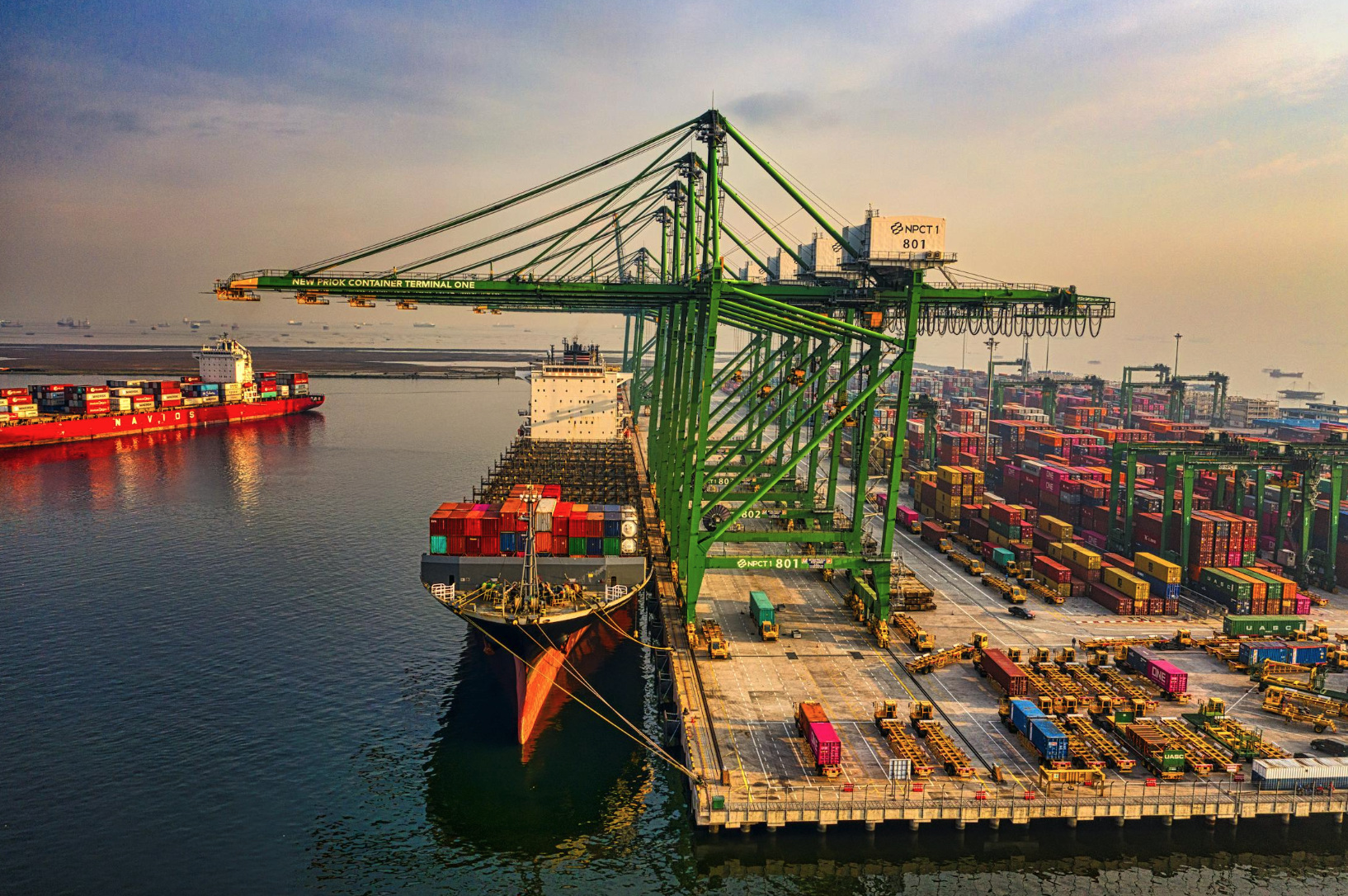
On March 19, 2026, South Korea’s Incheon New Port crossed a critical threshold: it entered the final construction phase of a fully automated container terminal. Not semi-automated. Not hybrid. Fully autonomous.

blog
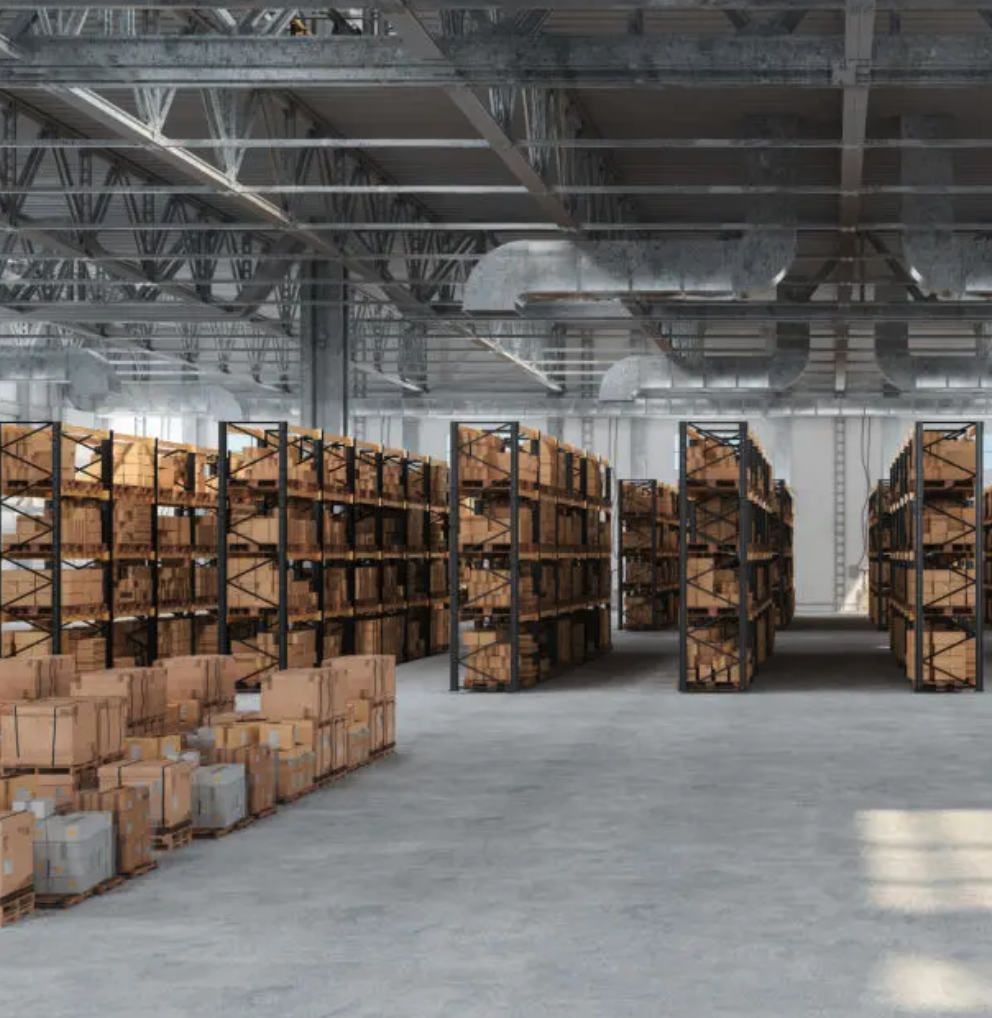
Last week, DHL Supply Chain announced a major new carbon-neutral logistics center in Rheinbach, reinforcing a message that is becoming impossible to ignore:
blog
On March 2, 2026, IFS completed its acquisition of Softeon in a move positioned as a way to “close the gap” between enterprise planning systems and warehouse execution. The message is clear: the boardroom wants better visibility into what’s happening on the floor.

blog
Chinese New Year 2026 is not “just” a week off in China; it’s a synchronized stop-and-start across factories, trucking, and ports that shows up weeks later as volatile vessel schedules and uneven container waves at U.S. gateways. The official Spring Festival holiday runs Feb 15–23, 2026 (with make-up workdays on Feb 14 and Feb 28), extending the national shutdown window shippers plan around.
blog
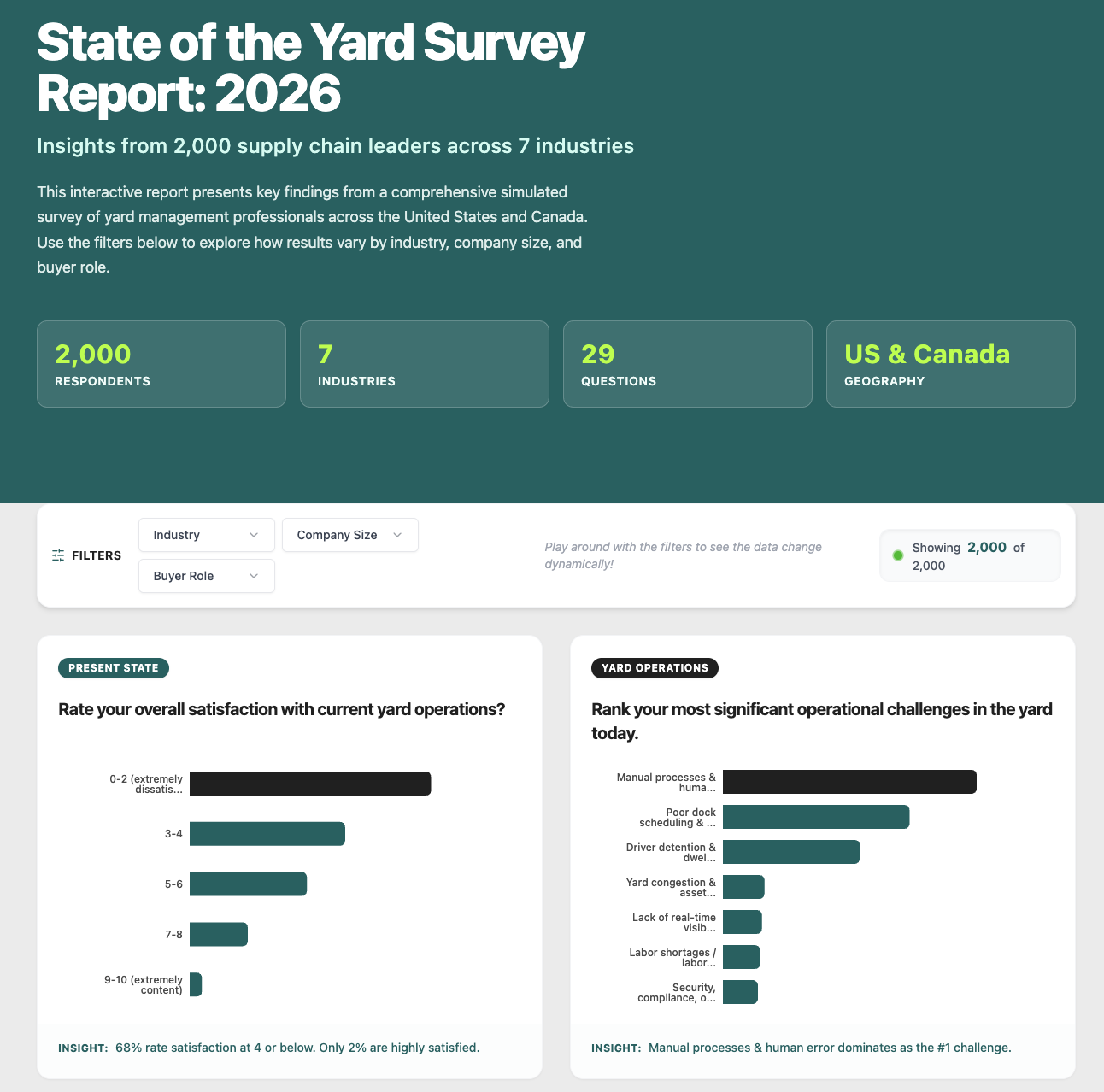
Today, we released interactive highlights of Terminal’s 2026 State of the Yard survey, a first-of-its kind synthetic poll of 2,000 industry leaders, key decision makers, and logistics operators. And what it reveals is a market at a genuine inflection point.
blog
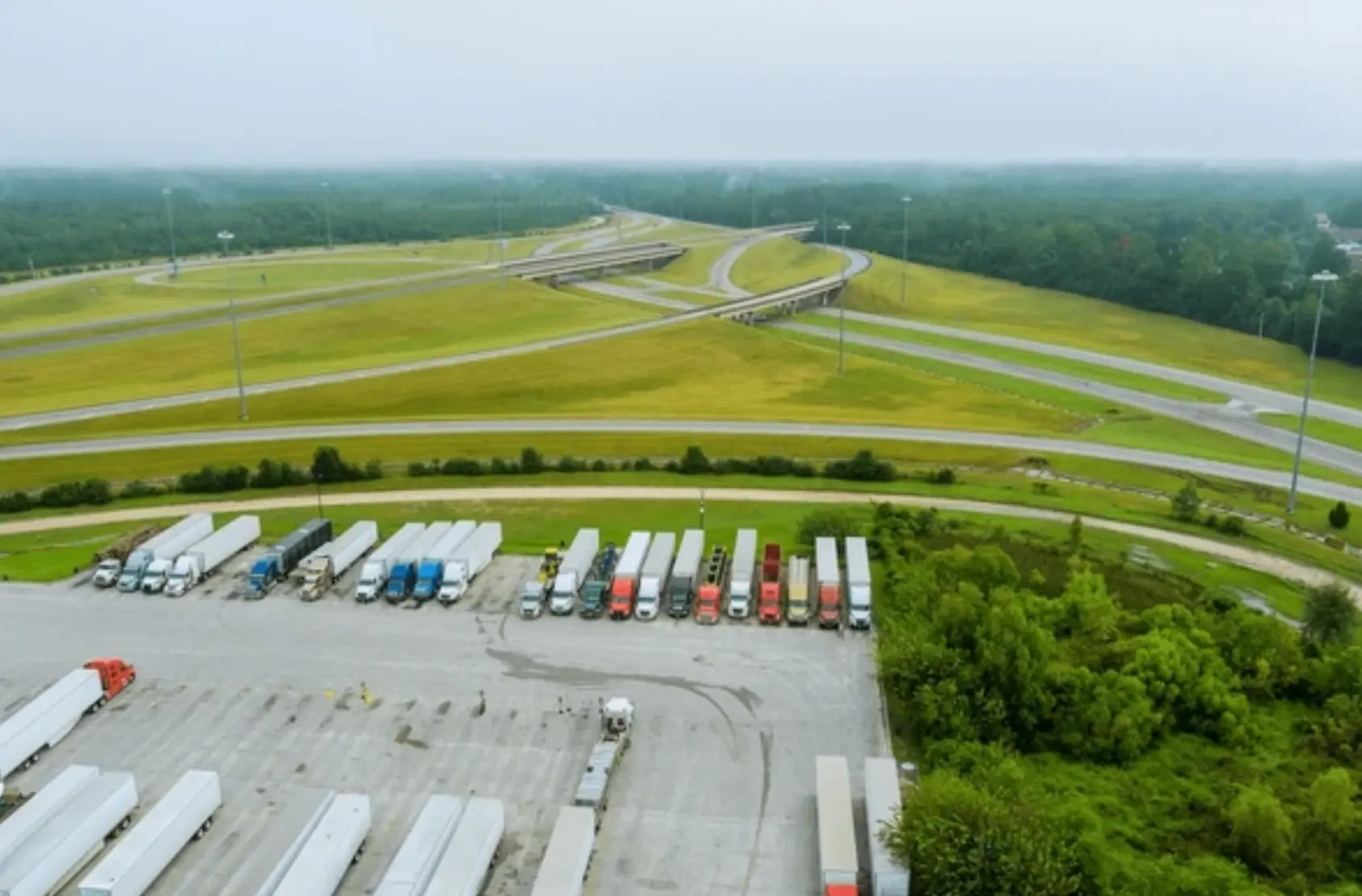
The market for Yard Management Systems (YMS) is bifurcating. On one side are the "Legacy Specialists" (Kaleris, Yard Management Solutions) and "Generalist Ecosystems" (SAP, Blue Yonder). On the other is the AI-Native Operating System: Terminal Industries.
2025 Market Guide
Yard Management
Featured Vendor


Copyright Terminal Industries © 2025 All Rights Reserved
Technical Index